
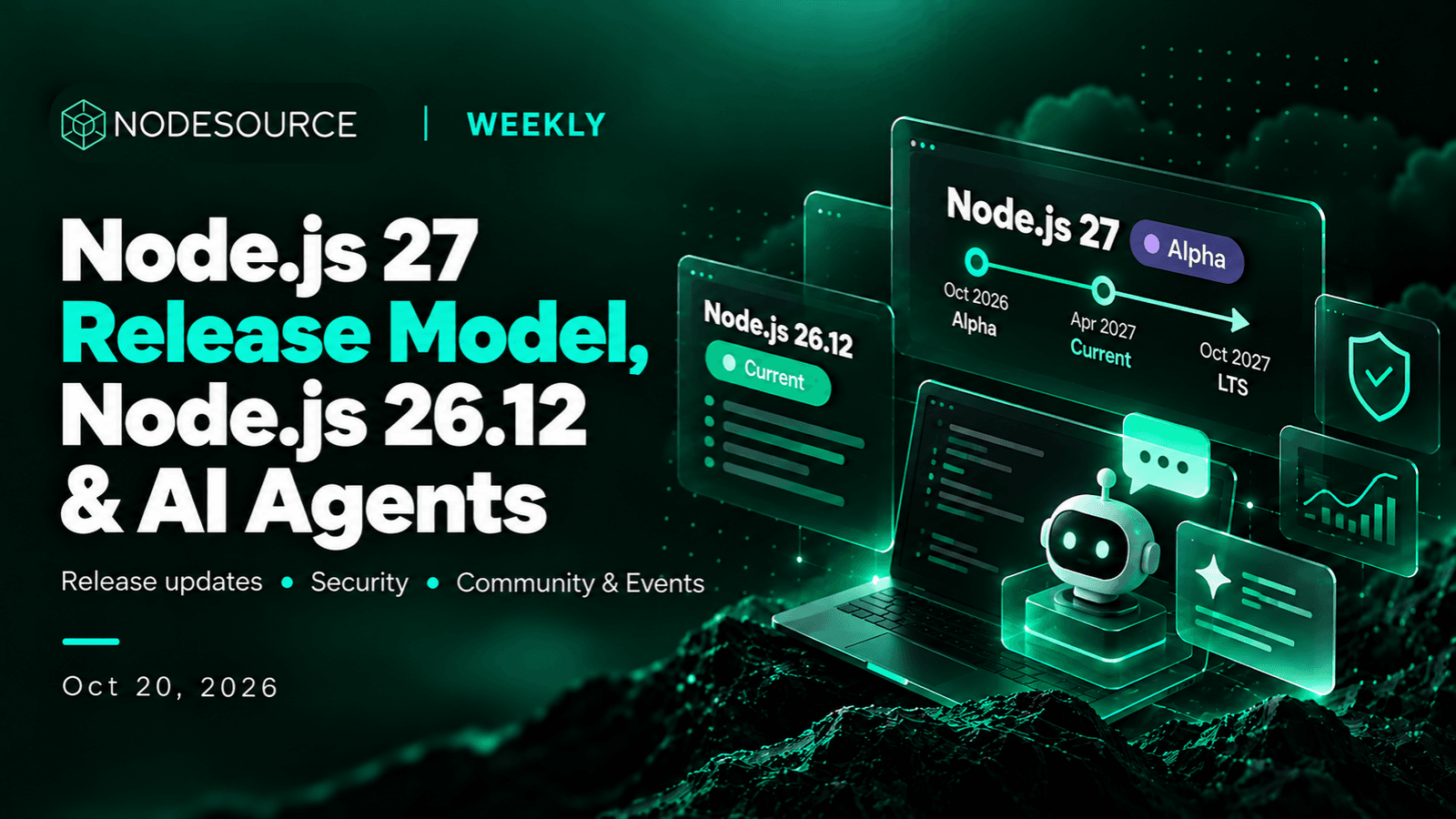
NodeSource Weekly — Oct 20, 2026: Node.js 27 Release Model, Node.js 26.12 & AI Agents
NodeSource Weekly: Node.js 27’s new release model, Node.js 26.12 and 24.22 updates, security releases, AI agents, and JSConf México 2026.
NodeSource Weekly: Node.js 27’s new release model, Node.js 26.12 and 24.22 updates, security releases, AI agents, and JSConf México 2026.

NodeSource Weekly: Node.js 26.11 updates, N|Solid with OpenVEX, the new Node.js release model, AI agent news, and community updates.

Learn how N|Solid uses OpenVEX to add exploitability context to CVEs, reduce vulnerability noise, and help teams prioritize real Node.js security risk.

NodeSource Weekly — Oct 6, 2026: Node.js 26 approaches LTS, N|Solid 6.3.8 ships, Node.js 20 support fades, plus JSConf México and AI updates.
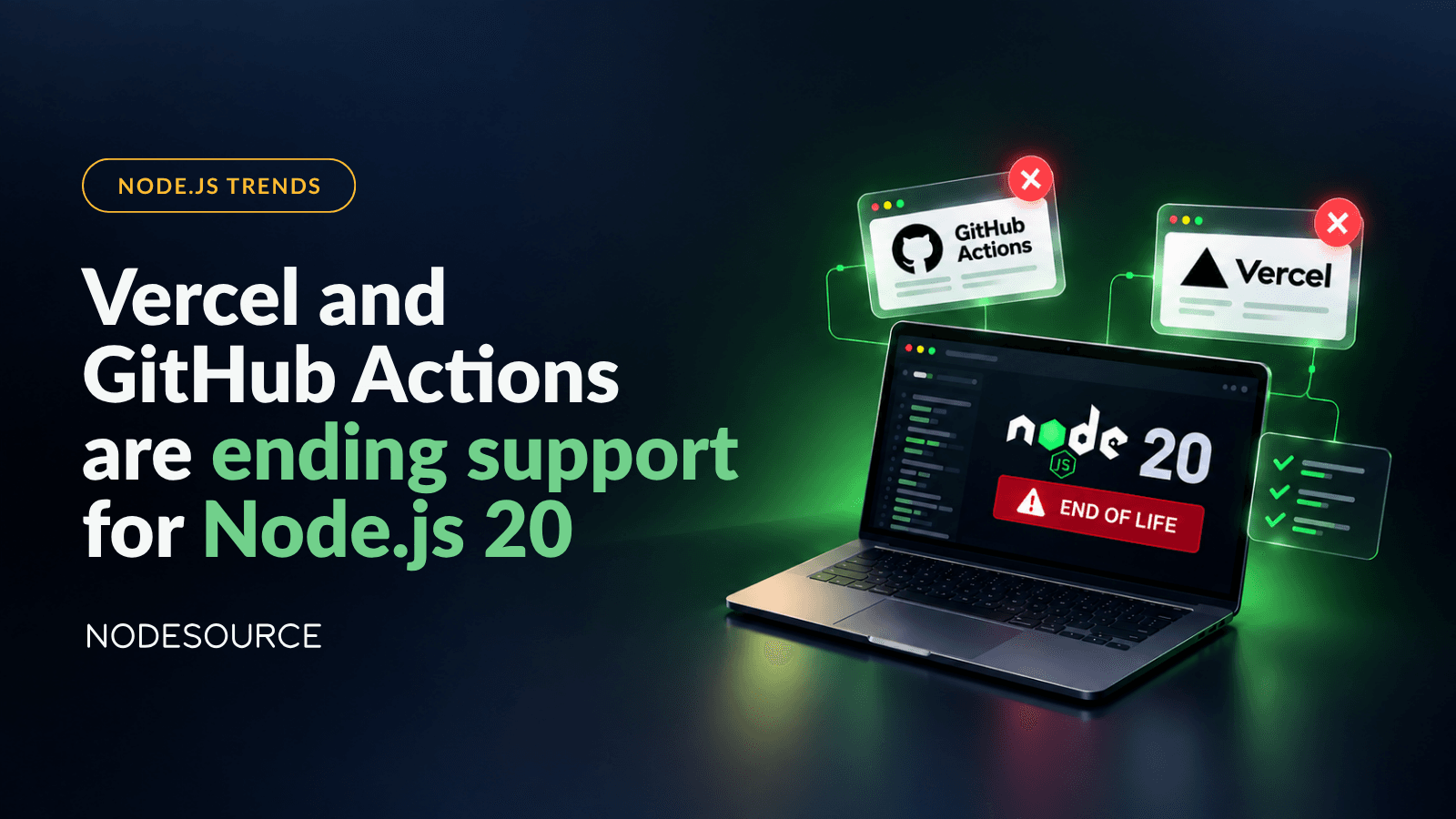
GitHub Actions has removed Node.js 20, and Vercel is ending support. Learn what Node.js 20 EOL means, what’s changing, and how to prepare your projects.

Catch up on the latest Node.js and JavaScript updates, including TC39 Stage 4 proposals, AI agent tooling, NodeConf EU 2026, GitHub Actions changes, and NodeSource’s latest Windows upgrade guide.

Explore where AI agents already help debug production Node.js, where runtime context still matters, and why human expertise remains critical.

NodeSource Weekly covers Node.js 26.9.0 and 26.10.0, AI-assisted development security, NodeConf EU 2026, and the Node.js Upgrade Program.

AI can generate correct Node.js code while choosing outdated runtimes or vulnerable dependencies. Learn why current baselines matter for security.

Catch up on Node.js 24.21.0 and 26.8.2, N|Solid's 98% August growth, 2.5K DevTools downloads, NodeConf EU, and the latest AI agent updates.
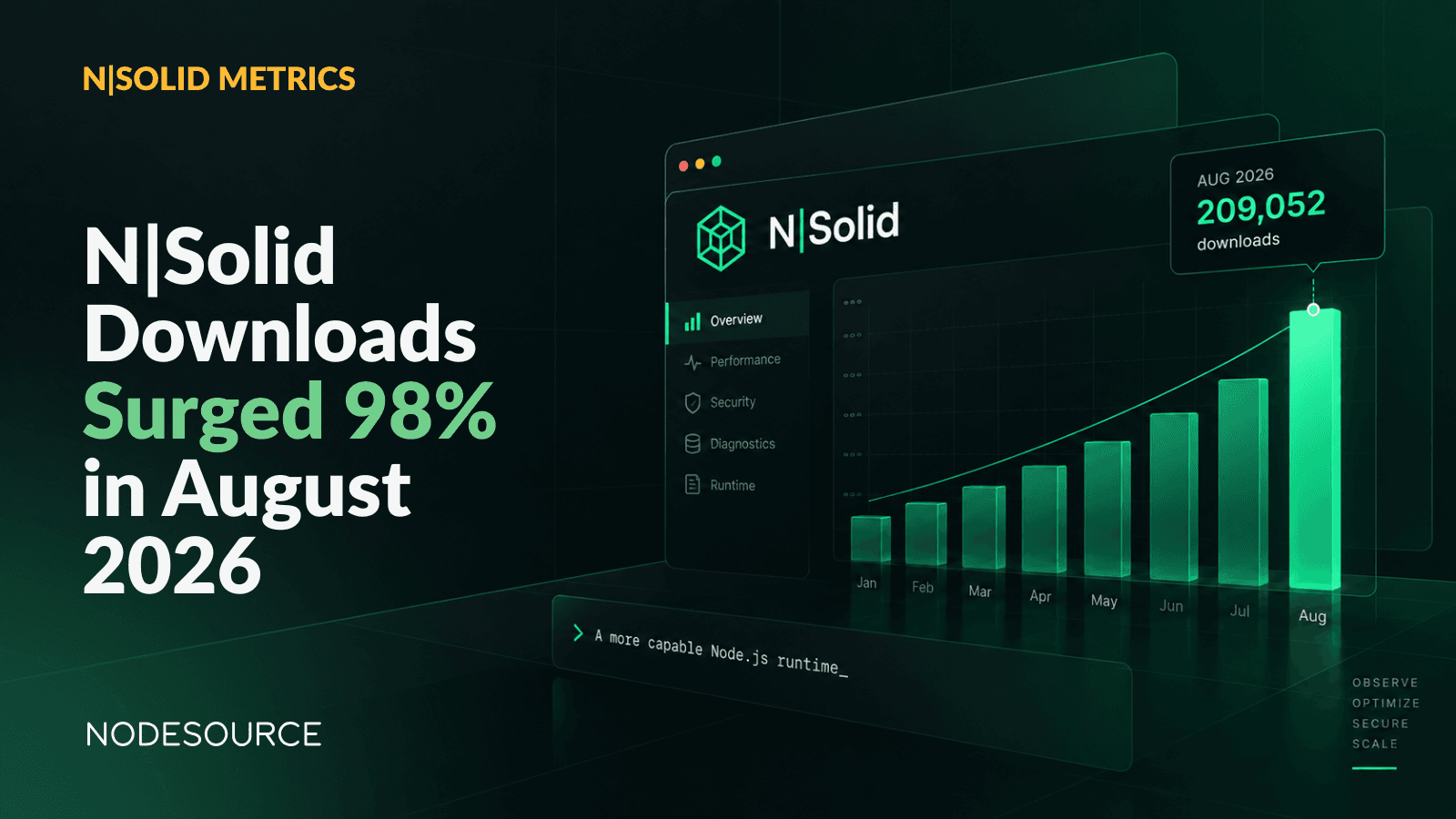
N|Solid reached 1.15M+ downloads in 2026, with 98% growth in August. See what the latest data shows about Node.js runtime adoption and version trends.
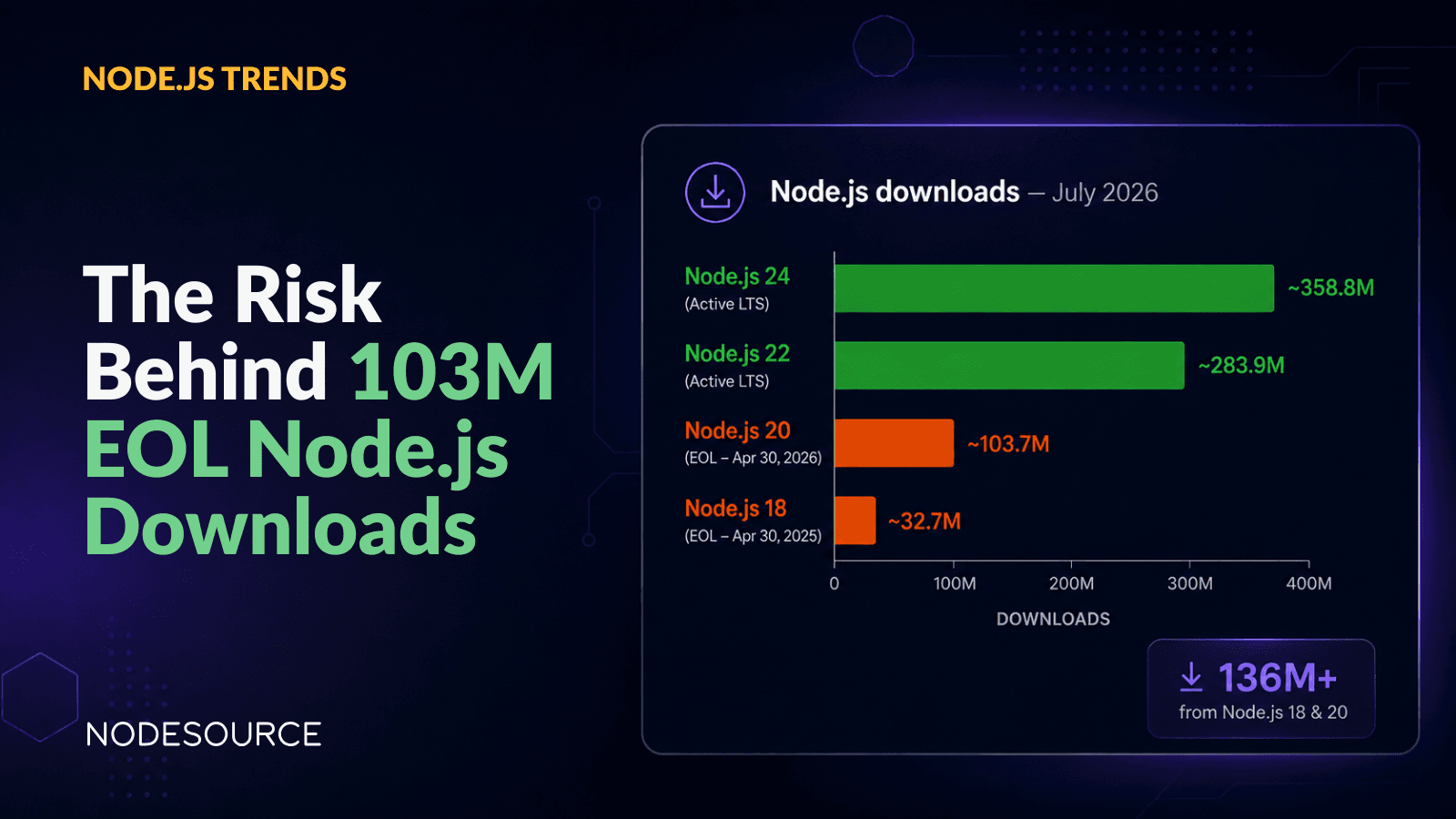
103M Node.js 20 downloads in July 2026 show EOL adoption is still widespread. Explore why teams stay on unsupported versions and the risks involved.